Chapter 4 of 12
Costumes
To appear on television in 1965 or 1966, they went to another village to borrow skirts. Then they sewed their own. That is the story of the costume.
The skirts borrowed from Bustares
Around 1965 or 1966 word spread that Spanish television was coming to the festival. The águedas were delighted, but they had a problem: no costume to show off in. Asking from village to village, they learned that the women of Bustares still had their refajo skirts, and off they went to ask for them.
They came back with the costumes, on loan for the occasion only. After the festival they returned them and were back where they started: wanting their own and without the money to make them.
Twelve or fourteen skirts
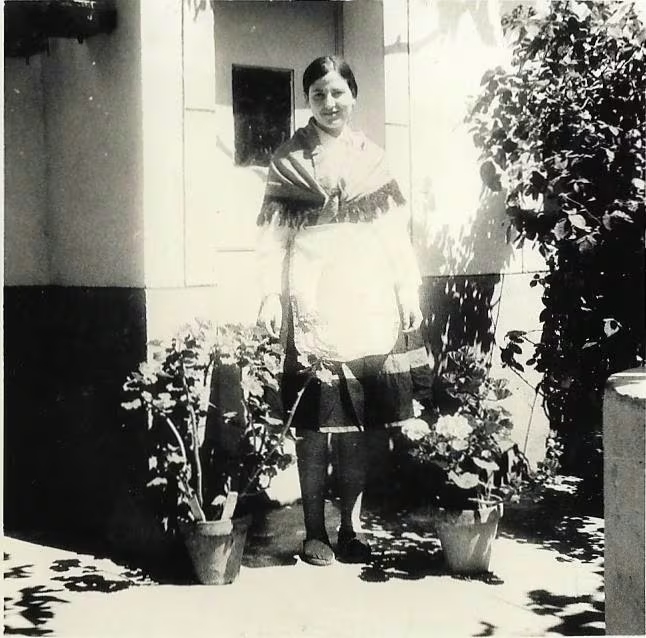
The solution came from a gentleman with an estate in Espinosa, who gave them money for the cloth when he heard about the problem. The sewing they did themselves, and twelve or fourteen skirts came out of it: black, with two red stripes around them. The mayoress’s had three, to set it apart.
From white apron to Alcarria costume
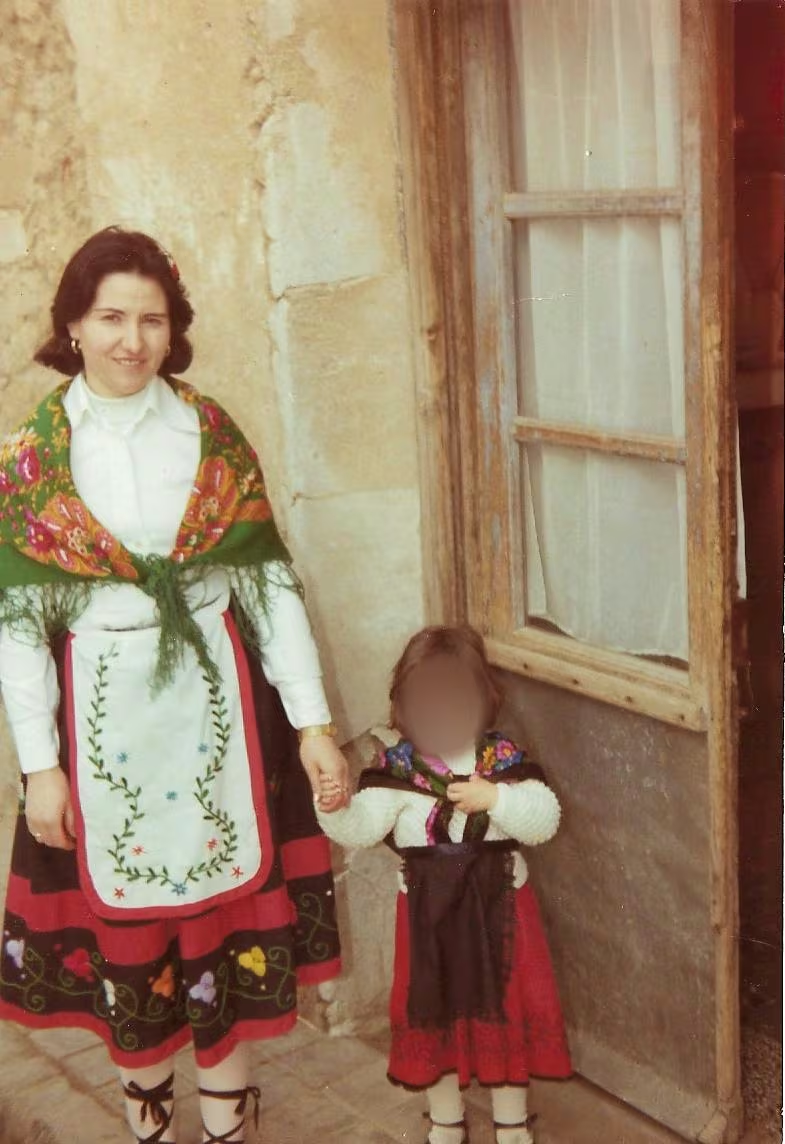
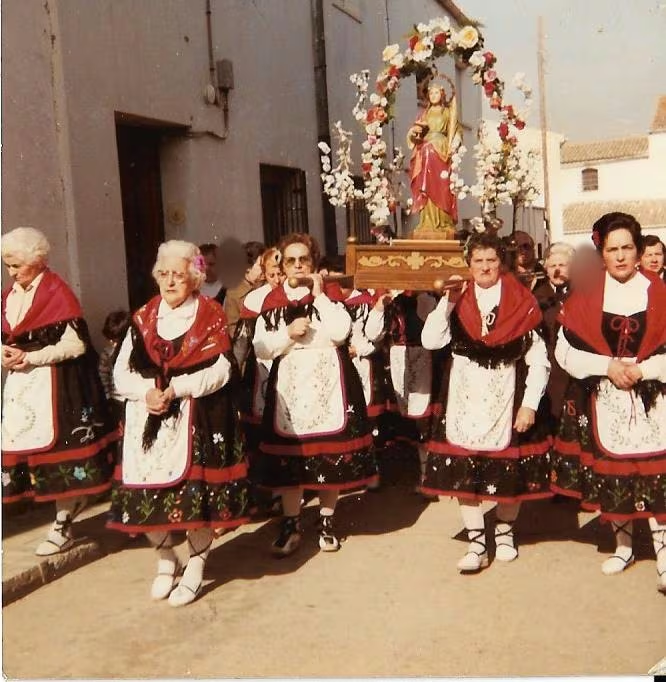
That first costume was completed with a white blouse, a red fringed shawl with coloured flowers, a white apron and hand embroidery on the skirt. Some sisters still wear it.
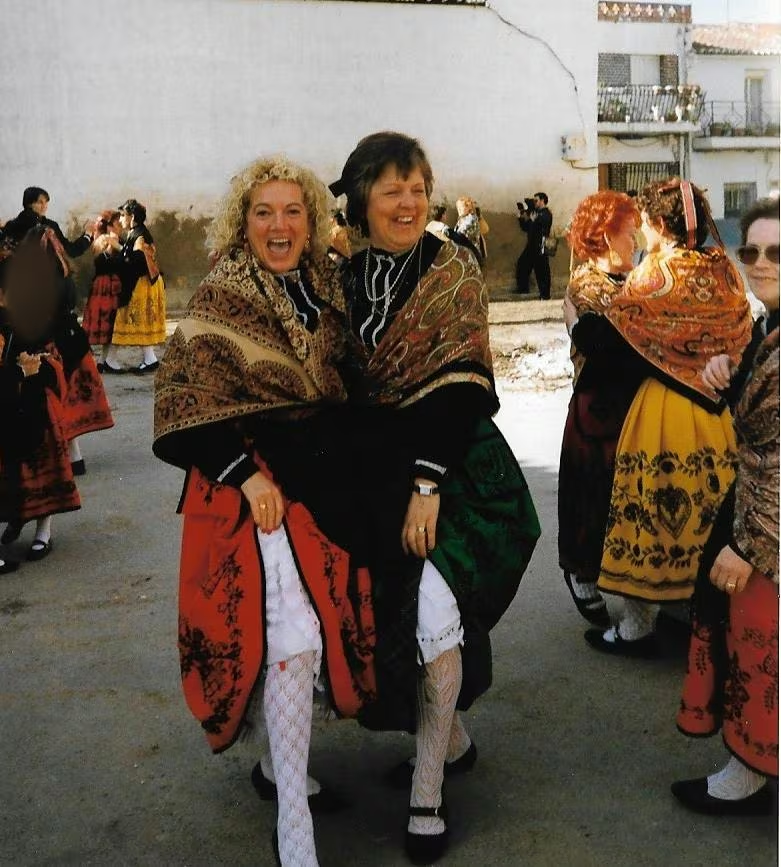
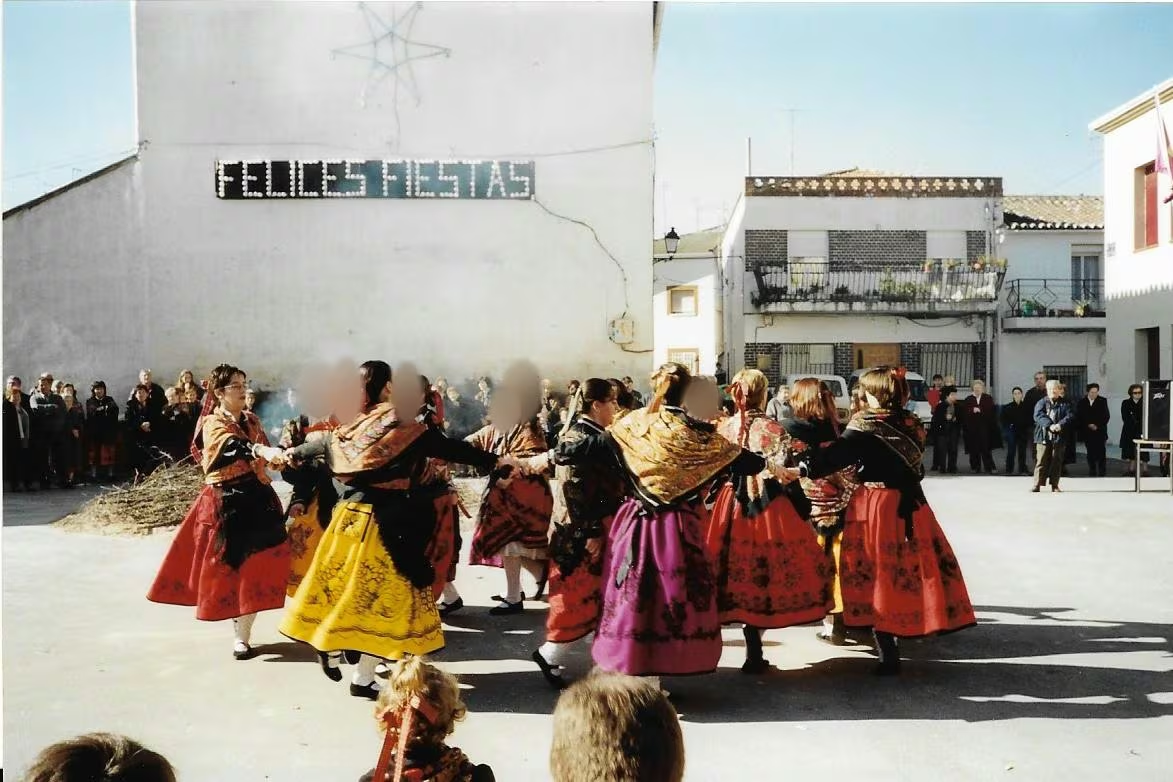
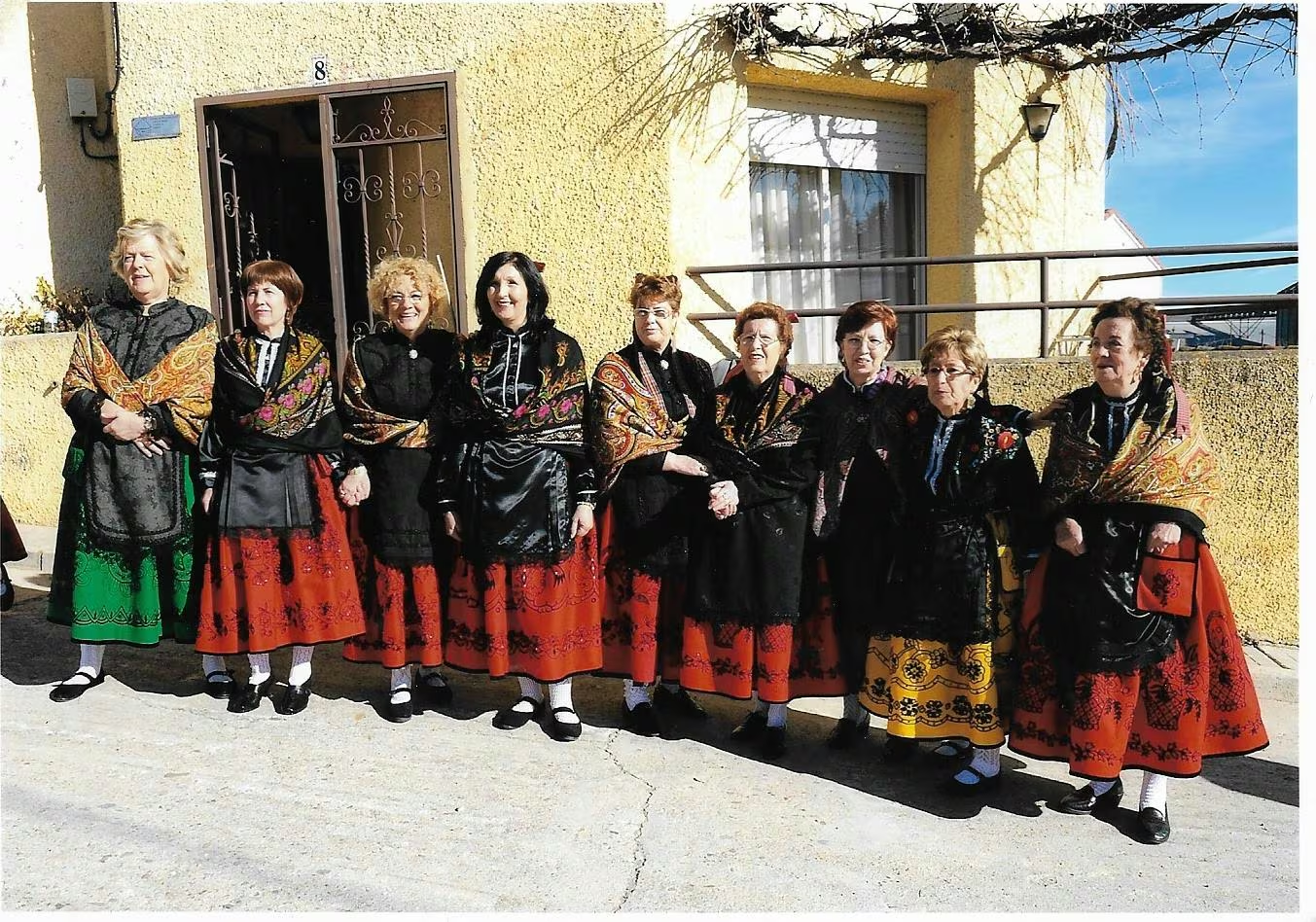
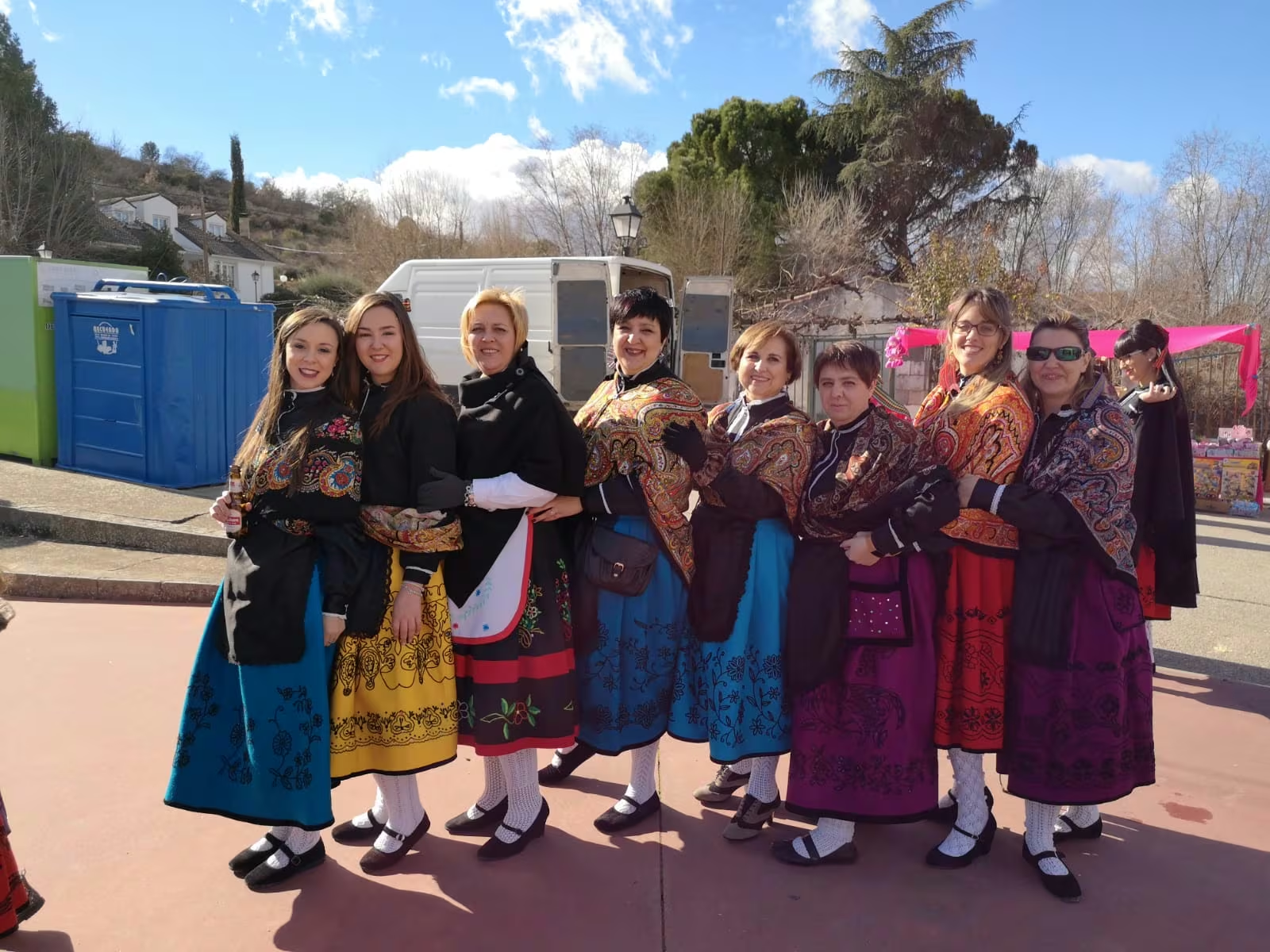
Later came the typical Alcarria costume: black satin blouse, shawl, skirt hand-embroidered in black, black apron, white stockings, bloomers and petticoats. It is what fills the square today with reds, yellows, blues and purples.
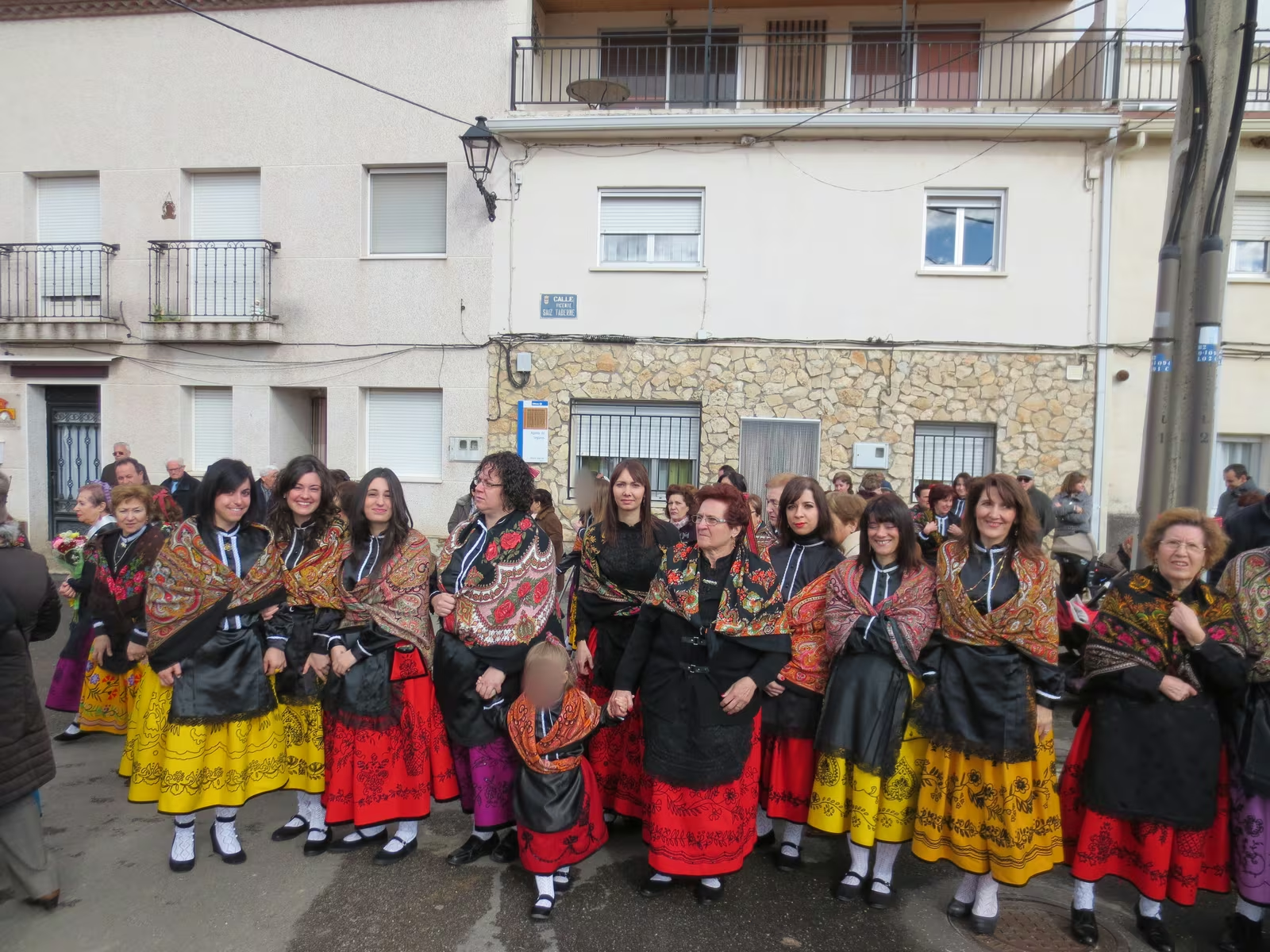

Garment by garment
- Patterned shawlAlcarria costume. The medallion with the saint’s image, new in 2020, is worn over it.
- Black satin blouseWith white lace at the neck and cuffs.
- Black apronThis piece marks the change from the old white-aproned costume to the Alcarria one.
- Red skirt embroidered in blackHand-embroidered with plant motifs.
- Saffron skirt embroidered in blackThe same embroidery on another colour. There are red, yellow, blue and purple skirts.
- Stockings, bloomers and petticoatsWhite lace stockings and black shoes.
- White blouseThe earlier costume, which some sisters still wear.
- Red fringed shawlWith coloured embroidered flowers.
- White apronEmbroidered with a garland of leaves and flowers.
- Black skirt with red stripesThe mayoress’s had three stripes instead of two, to set it apart.