Chapter 3 of 12
Pranks and fun
What is told here are memories of another time, passed on with the laughter of those who were there. What remains today is the joke.
The mayor at the stove
In the earliest years anyone remembers, the women ate in the square itself, around the fire: roast potatoes, the odd sardine and whatever could be found.
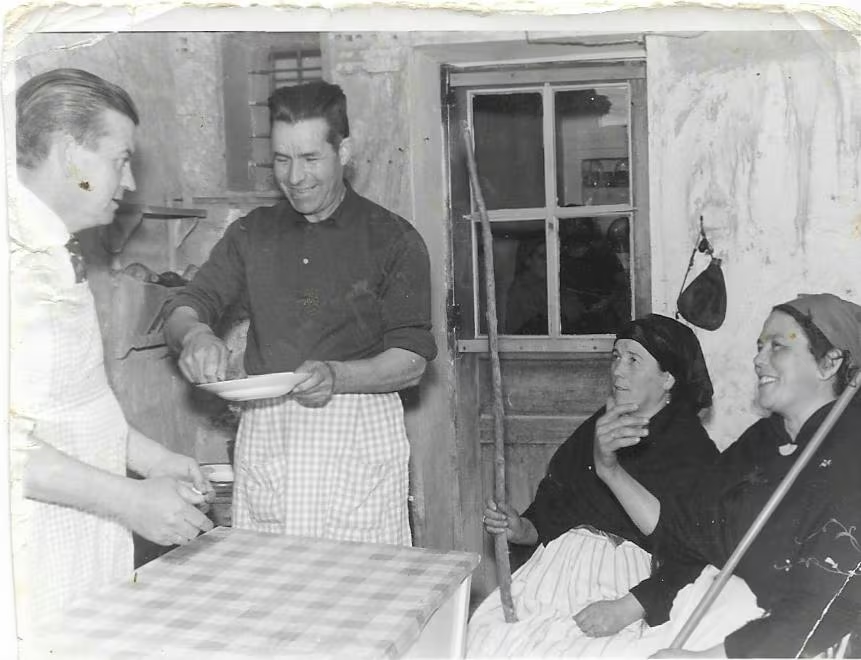
One of the village’s favourite stories comes from that time. The mayor then was Julián García Soria, the miller. One year he and Sátur’s husband ended up in her house cooking for the women, with a few of them keeping watch, stick in hand. They knew how that day worked, so they did as they were told.
The firecracker and the trousers
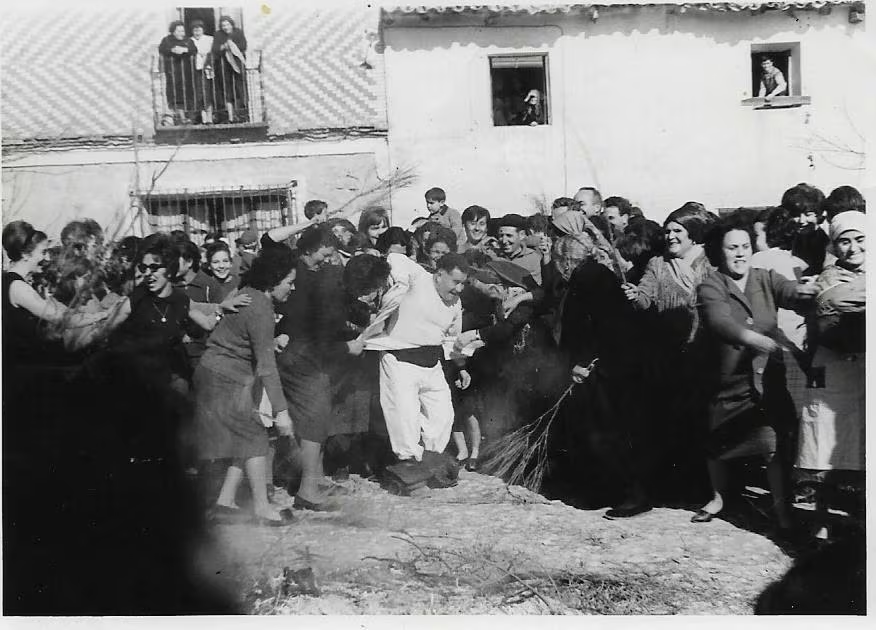
Another year, a villager had the bright idea of throwing a firecracker into the bonfire. The response was to take off his trousers on the spot, with his own wife among those cheering loudest. He made a show of resisting. The 1991 study says one of these jokes was even seen all over Spain, in Spanish television’s broadcast.
The world turned upside down
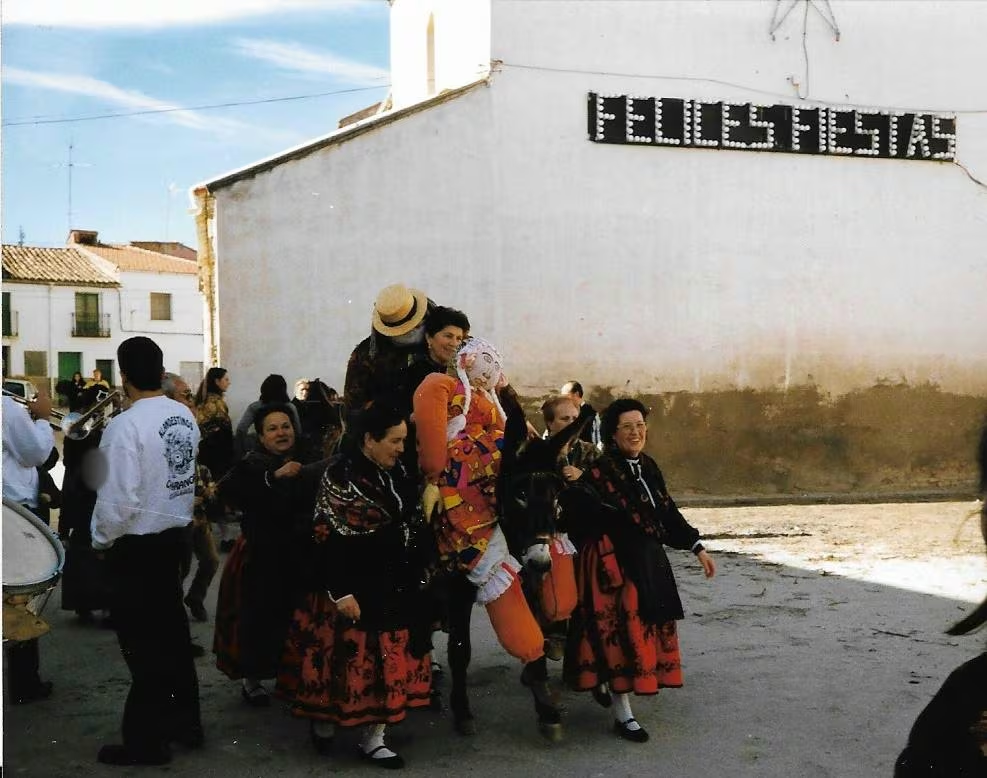
Reports from the 1960s and 70s describe a rowdy festival: men who had to pay to enter the dance, a donkey dressed in a straw hat and old trousers to collect donations, and a bonfire defended against the young men who wanted to put it out.
These were rituals of the world turned upside down, accepted by the whole village as part of the game: a single day when those who never ruled could rule. Recent reports speak of the staff, the procession, the jota and the brass band. The reversal goes on, now as humour and protocol.