Chapter 8 of 12
Traditional dances
A jota that names the village, and a group of sisters who travelled in the depths of winter to rehearse. They stopped, the itch stayed, and they came back.
A group that started from scratch
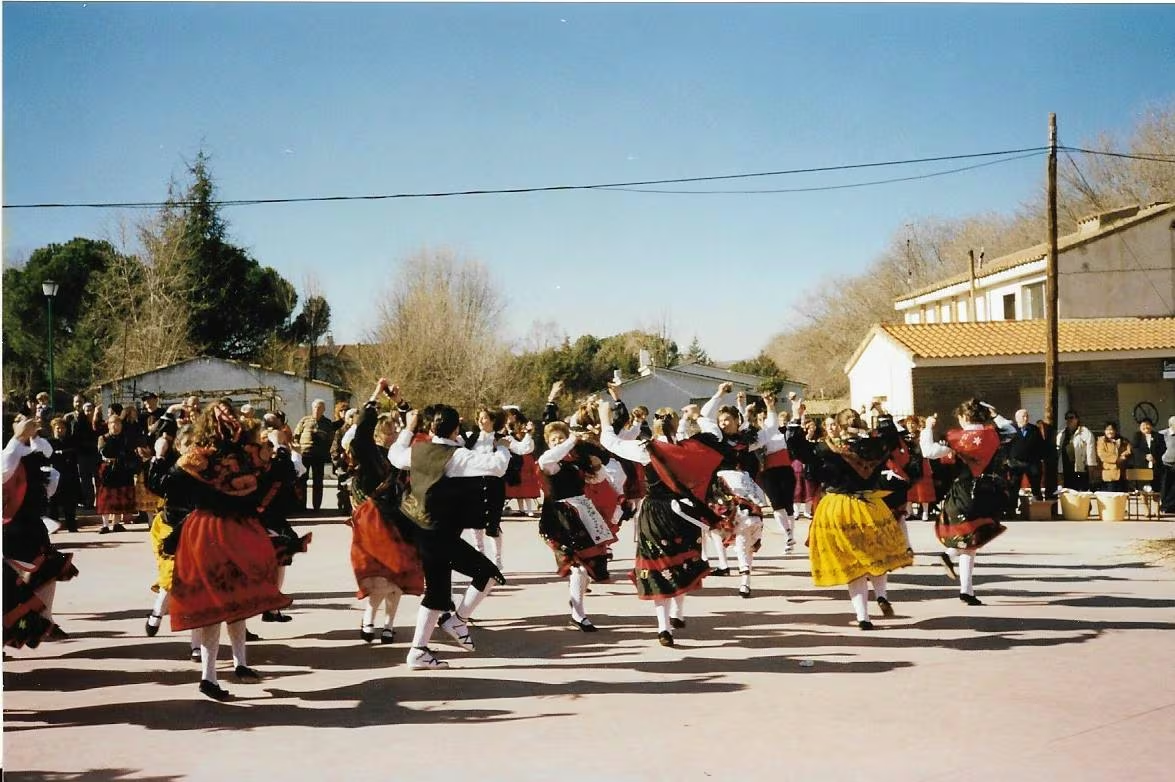
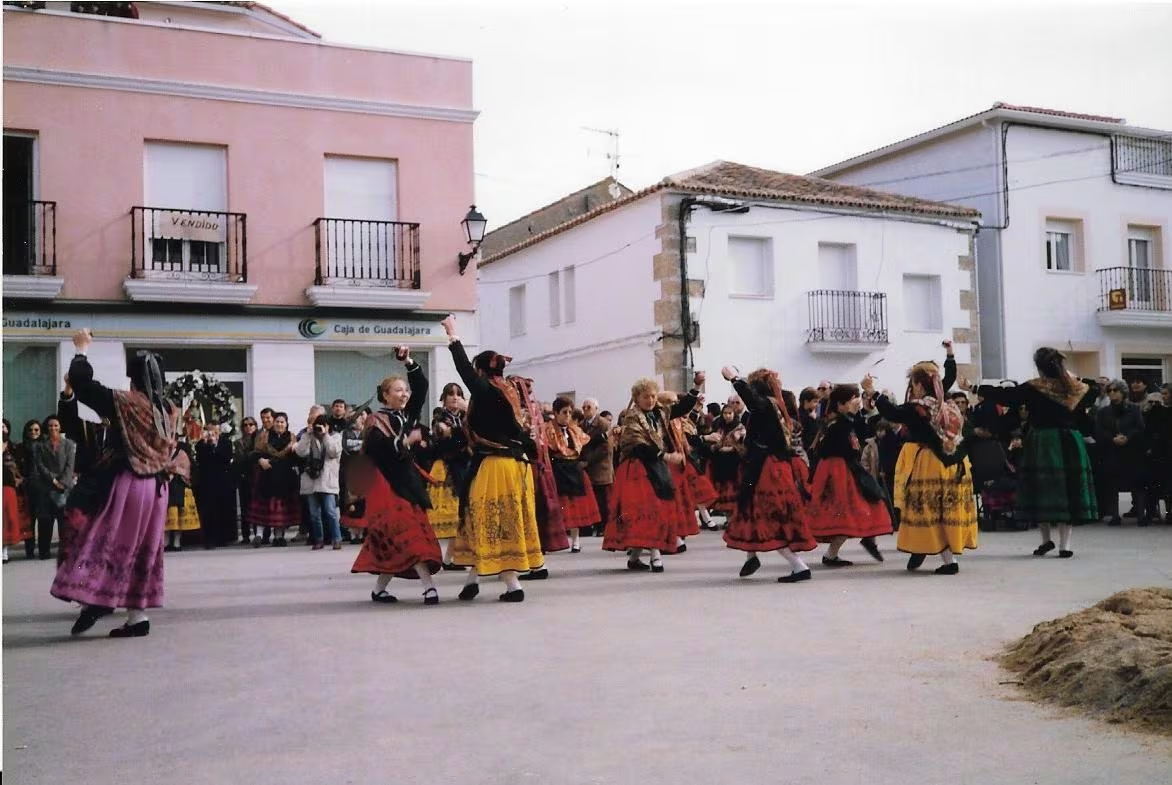
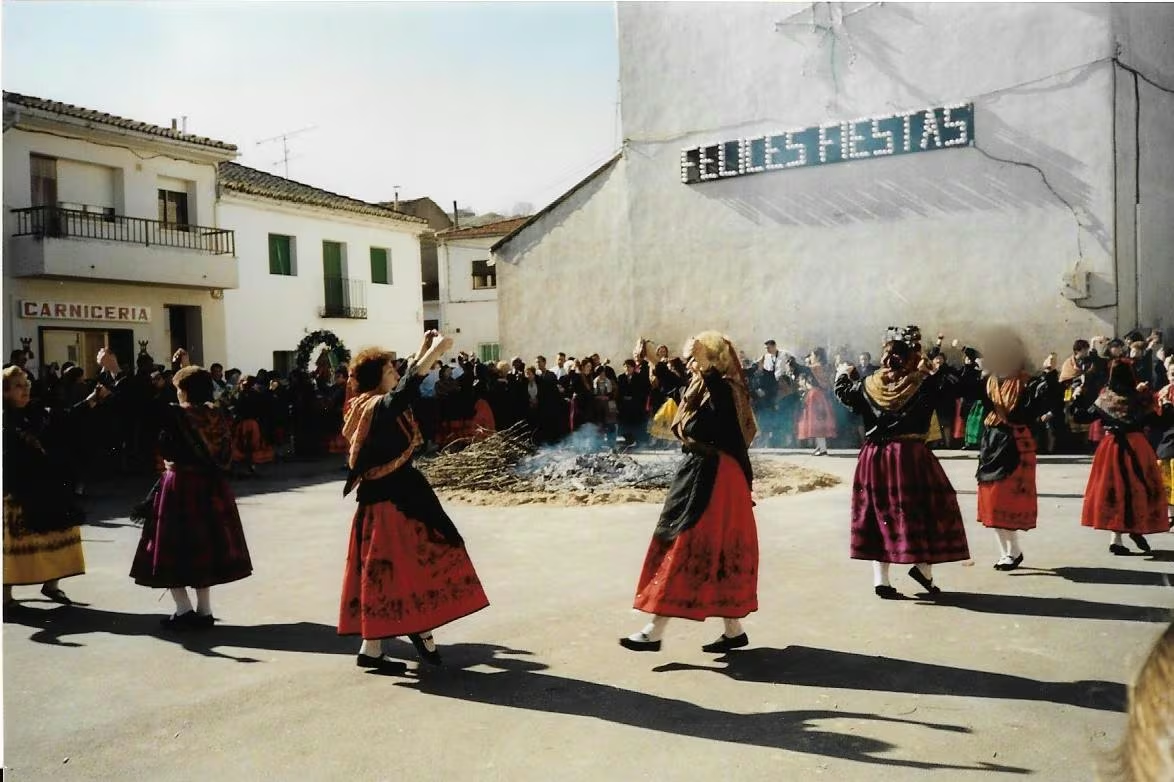
Around the bonfire, as the 1960 report already said, «only the jota is danced». Decades later, a group of sisters wondered why they should not learn more dances. They had no idea where to begin, so they found a teacher from Cogolludo who did this for a living and began encouraging the others. A great many signed up.
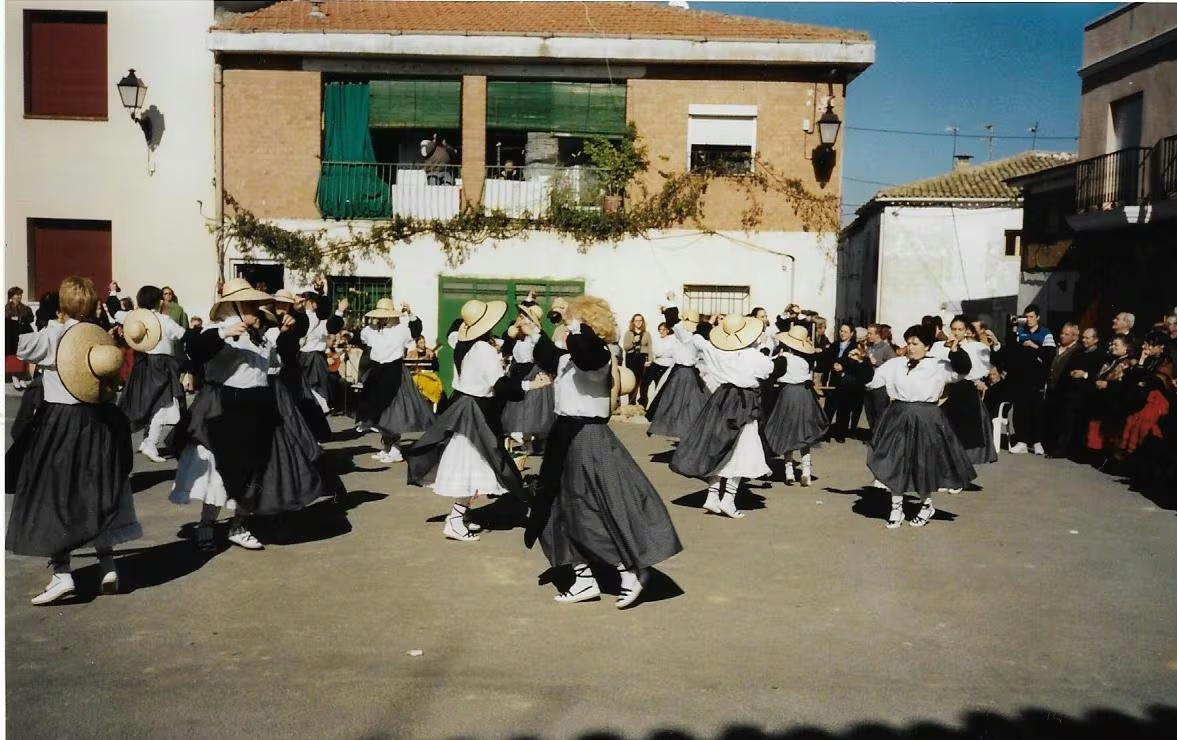
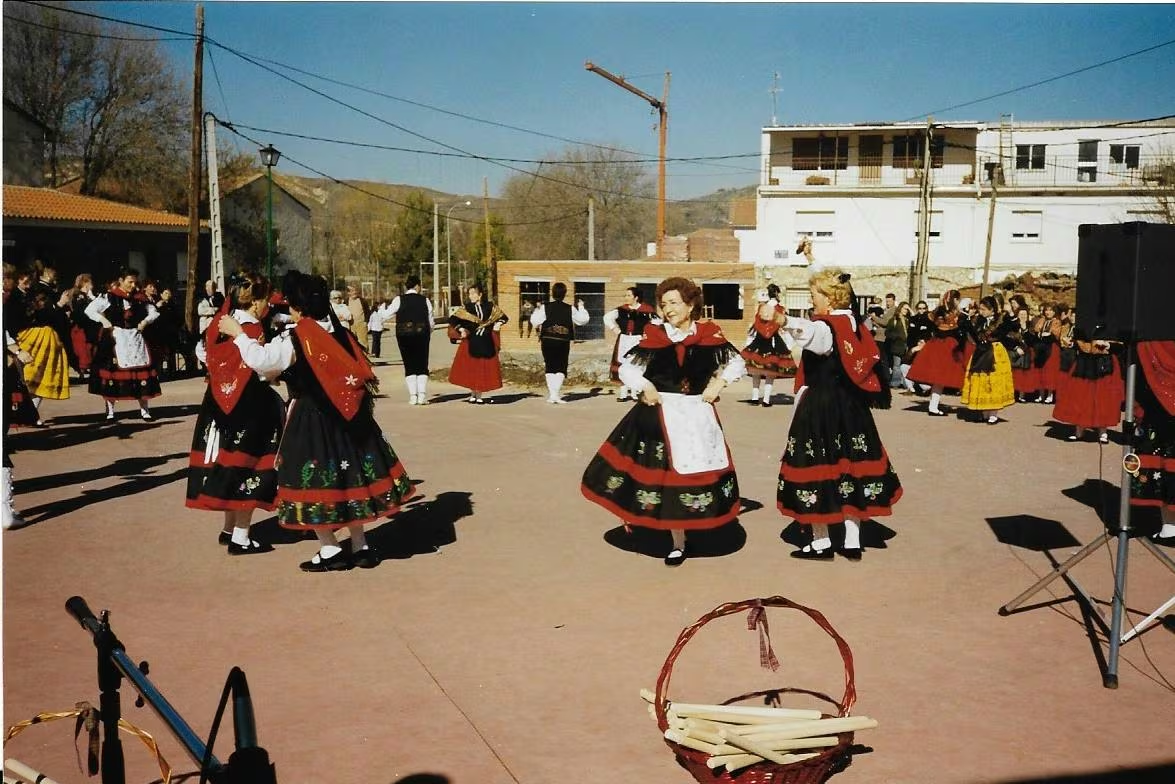
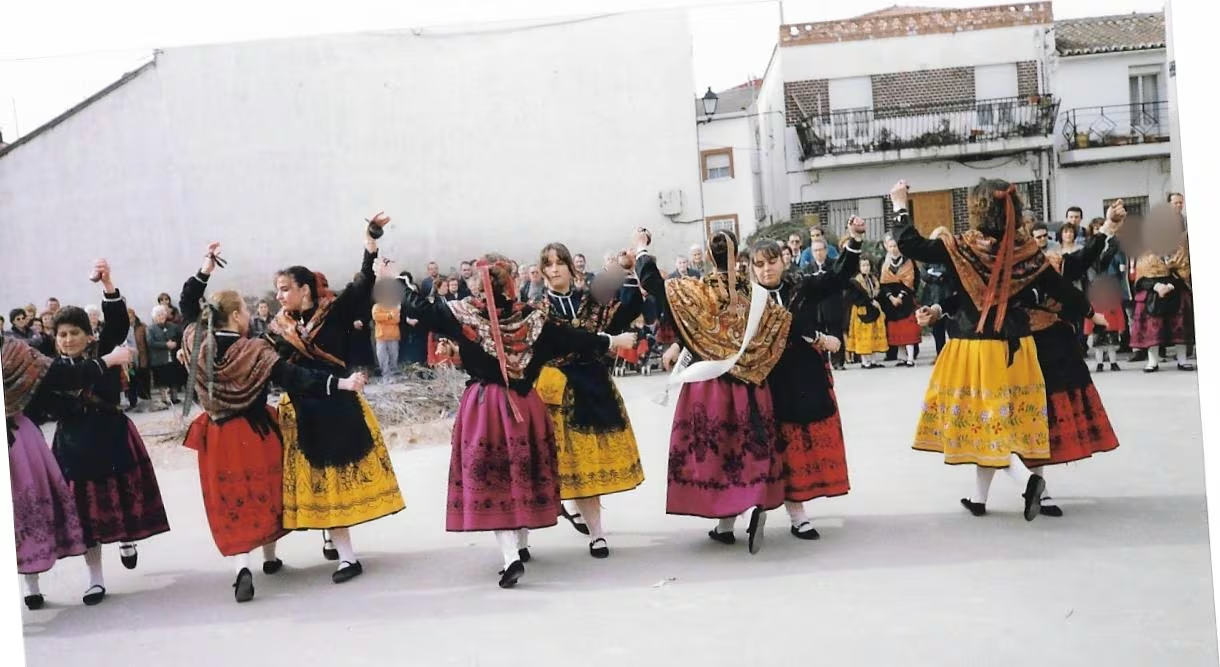
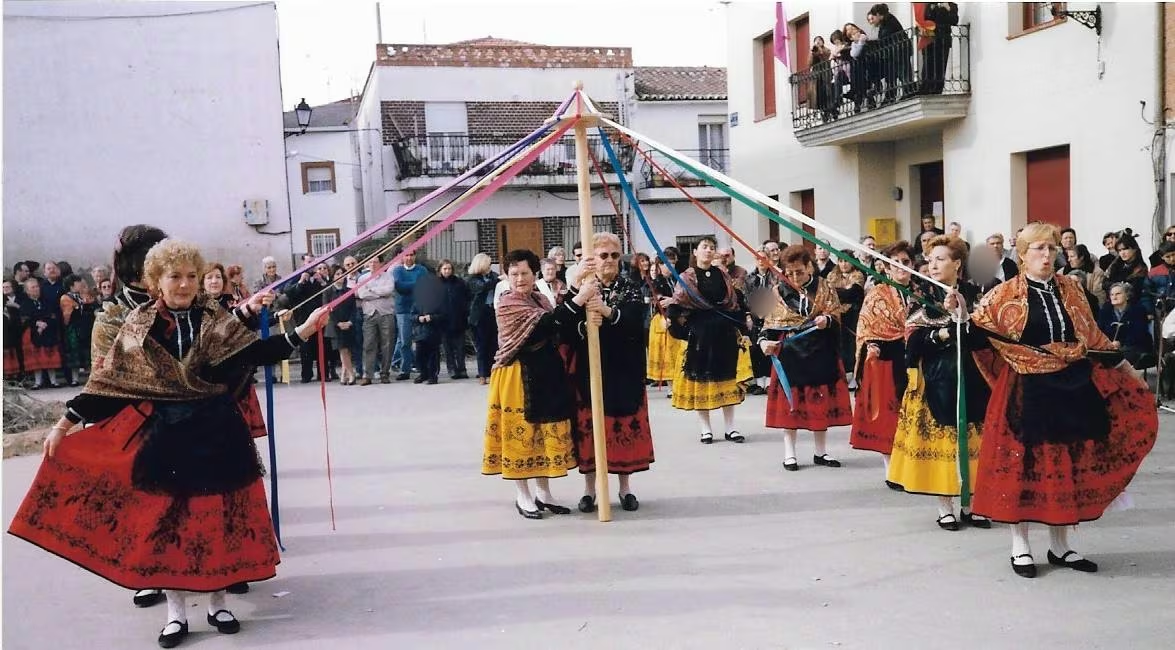
They learned the hoops, decorated in colours; the ribbons, woven in and out; the rondeña; the grape harvest, with its own costume; and above all the Castilian jota composed for them, whose lyrics name Espinosa.
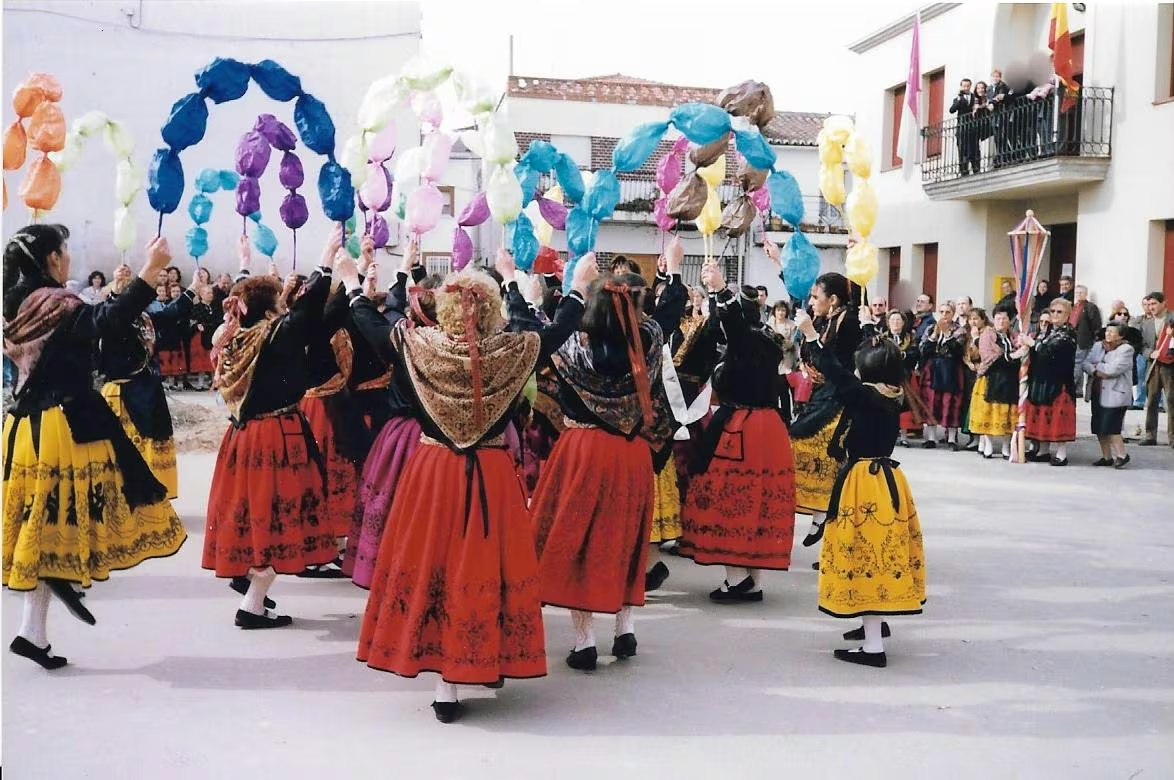
Rehearsing in midwinter
Keeping it going was not easy. Those who lived away came back to the village in winter, in bad weather, just to rehearse. They did so for years, because they did not want to break the chain. Even so, like almost everything, one day it came to an end.
The return of the jota
But the jota had stayed with them. For the 2020 festival the board proposed dancing it again around the saint and the bonfire. They put up a list without knowing who would sign, and many did. This time there was no teacher: those who had danced it years before taught those who never had, in very little time.
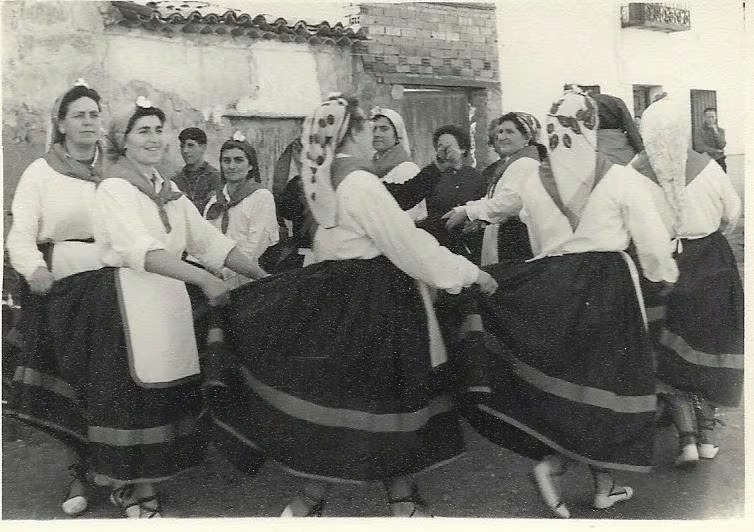
In the evening, in the breaks of the dance, comes the wheel, for women only. Mínguez described it too in 1991: it is the women who ask others to dance.